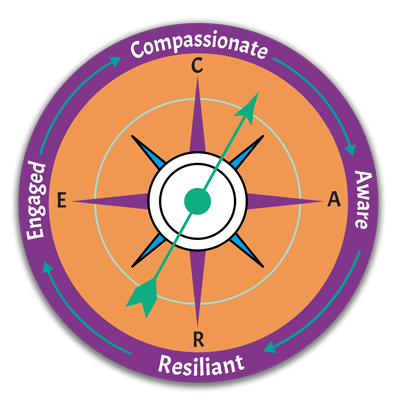

Resilience doesn’t mean never feeling tired or overwhelmed. It means finding ways to keep showing up even when life feels heavy. In caregiving, resilience is what allows us to weather sleepless nights, challenging behaviors, and the ongoing grief of gradual loss—while still holding onto hope and love.
When I cared for my mother with Alzheimer’s, I discovered that resilience wasn’t about being strong all the time. It was about allowing myself to rest, to cry, and to ask for help. It was about bouncing back after hard moments, again and again.
The Research on Caregiver Resilience
Studies show that resilience is one of the most important predictors of caregiver well-being:
• Caregivers with higher resilience report less depression and stress and greater life satisfaction.
• One study found that resilient caregivers were 30% less likely to experience burnout compared to those with low resilience.
• Resilience isn’t fixed—it can be strengthened through self-care practices, supportive relationships, and meaning-making.
How Caregivers Build Resilience
- Pace Yourself: Take caregiving one day—or one hour—at a time. Looking too far ahead can be overwhelming.
- Accept Help: Resilient caregivers don’t do it all alone. They build a circle of support, whether family, friends, or community resources.
- Find Meaning: Even in hardship, there can be moments of beauty, humor, or connection. Meaning gives strength.
- Tend to Your Body: Sleep, nutrition, and movement aren’t luxuries. They’re resilience practices.
A Simple Resilience Exercise: The Micro-Rest Reset
Even a 2-minute pause can help restore balance:
- Sit down. Place both feet on the ground.
- Breathe. Take three slow breaths, lengthening the exhale.
- Release. Drop your shoulders, unclench your jaw, and soften your gaze.
- Reframe. Ask yourself: What can I handle in the next hour?
These mini-resets build stamina, one pause at a time.
The Gift of Resilience
Resilience doesn’t erase the challenges of caregiving, but it changes how we meet them. It keeps us steady through storms and allows us to rise after setbacks. It is the quiet strength that makes compassionate care sustainable.
With awareness as our foundation, and compassion as our guide, resilience is the anchor that keeps us from drifting too far off course.







One Response
Testing a comment
Cw