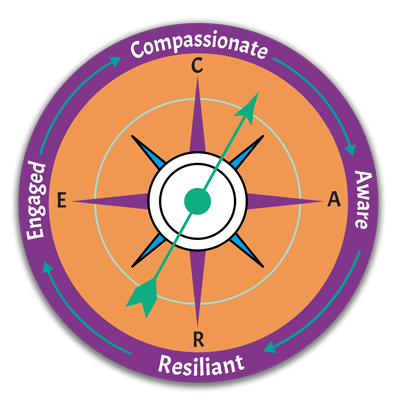

If awareness is the doorway to caregiving, compassion is what moves us through it. Awareness shows us what’s real; compassion shapes how we respond. Without compassion, caregiving can feel like a list of duties to be completed, such as feeding, cleaning, and driving to appointments. With compassion, those same tasks, including reminding, redirecting, reassuring, & listening, become acts of love and connection.
What Compassion Really Means
Compassion is different from pity. It’s not about feeling sorry for someone. Compassion is the willingness to notice suffering and respond with care. It says: I see you. I feel with you. And I am here beside you.
While caring for my mother with Alzheimer’s, I experienced moments of frustration. Sometimes she wouldn’t even recognize me, and her fear or exhaustion could turn into anger. During those times, awareness helped me understand what was happening. However, it was compassion that allowed me to respond with kindness rather than frustration.
Why Compassion Matters in Caregiving
- It softens the edges of challenging moments. Compassion makes it easier to meet agitation with calm.
- It strengthens trust. When care is delivered with warmth, your loved one feels safer.
- It heals the caregiver, too. Compassion enables us to forgive ourselves for our mistakes and approach our own struggles with kindness.
A Simple Compassion Practice: The Compassionate Pause
Here’s a tool you can use when emotions run high:
- Notice the tension. Are you feeling impatient, angry, or overwhelmed?
- Pause for one breath. Inhale deeply, exhale slowly.
- Shift your focus. Silently say to yourself: This is suffering. May I meet it with care.
- Respond with softness. Soften your voice, your touch, or your pace.
This practice doesn’t erase the difficulty, but it changes how you approach it.
Compassion for Yourself
Compassion must flow both ways. As caregivers, we often extend kindness outward but forget to turn it inward. Self-compassion is not indulgence—it’s survival. Remind yourself: I’m doing the best I can with what I have today. That simple affirmation can prevent burnout and keep your heart open.
The Gift of Compassion
When paired with awareness, compassion allows us to move beyond denial and fear into connection. It reminds us that caregiving is not only about tending to physical needs—it is about honoring the dignity and humanity of the one we care for.
Compassion, at its core, is love in action.
Caregiving is a marathon, not a sprint. Like any long journey, it requires stamina. That stamina comes from resilience—the ability to bend without breaking and to carry weight without losing ourselves.