Why the Care-Compass Works
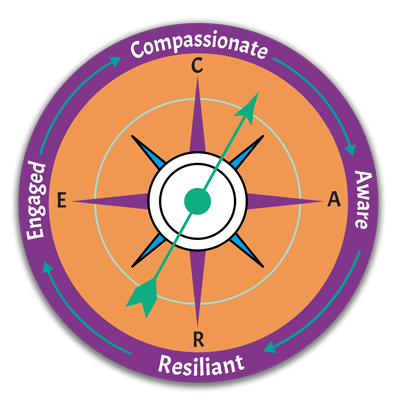
The Care-Compass integrates the evidence-based principles of Awareness, Compassion, Resilience, and Engagement into a practical orientation system — helping caregivers not only know what to do but also how to integrate the experience in real time.
Dementia caregiving is among the most extensively researched caregiving experiences worldwide.
Studies across medicine, psychology, and public health consistently highlight four key capacities that are linked to improved outcomes for both caregivers and patients — principles reflected in the Care-Compass framework.
- Early recognition, education, and a realistic understanding of disease progression reduce crisis events, improve decision-making, and lower caregiver distress.
- Relationship-centered care, emotional attunement, and compassionate communication reduce behavioral symptoms, reduce agitation, and improve quality of life for both the caregiver and the person living with dementia.
- Caregivers who cultivate coping skills, meaning-making, social support, and restorative practices experience lower rates of depression, burnout, and physical health decline.
- Social connection, music, movement, and meaningful activity help preserve emotional memory, support identity, and enhance daily well-being even as cognitive abilities change.
Sources include systematic reviews from the Alzheimer’s Association, National Academies of Sciences, WHO dementia care frameworks, and peer-reviewed caregiver intervention research (2015–present).